

 Posts
Posts


Wednesday, February 6, 2019
2019 Beerdrinker of the Year - and Previous Winners
The 2019 Beerdrinker of the Year National Finals will take place this Saturday (February 9th) at noon at the Wynkoop Brewery. For more information visit the BDOTY website:
http://wynkoopbdoy.com
The event is free, but don't forget to register with the Wynkoop's Eventbrite site.
(Note - updated on 2-10-2019 with yesterday's winner. Congratulations Kevin Cox - well deserved!!!)
Previous Winners:
1997: Jack McDougall of Cranford, New Jersey
1998: Bobby Bush Jr. of Hickory, North Carolina
1999: James Robertson of Pomona, California
2000: Steve Pawlowski of Roselle Park, New Jersey
2001: Cornelia Corey of Clemmons, North Carolina
2002: Gary Steinel of White Plains, New York
2003: Ray McCoy of Clemmons, North Carolina
2004: John Marioni of Bothell, Washington
2005: Tom Ciccateri of Alexandria, Virginia
2006: Tom Schmidlin of Seattle, Washington
2007: Diane Catanzaro of Norfolk, Virginia
2008: Matt Venzke of Hampton, Virginia
2009: Cody Christman of Golden, Colorado
2010: Bill Howell of Sterling, Alaska
2011: Phil Farrell of Cumming, Georgia
2012: J. Wilson of Prescott, Iowa
2013: Warren Monteiro of New York, New York
2016: Shawna Cormier of Denver, Colorado
2017: Sally Hill of Denver, Colorado
2019: Kevin Cox of Indianapolis, Indiana


Sunday, October 2, 2016
2016 Beerdrinker of the Year National Finals
The Beerdrinker of the Year National Finals are finally back! This Wednesday (October 5th, 2016) at 7:00 pm in the Wynkoop's Mercantile Room, an 18th member will be added to this elite club.
Here is a brief bio of the three finalists:

- Mike Dixon, a Wake Forest, North Carolina beer lover, homebrewer, National BJCP judge, and beer writer. Mike has enjoyed beers from 46 states and 44 countries and has visited well over 1,000 beer establishments in the US, Belgium, and Ireland. His extensive volunteer beer work includes working to successfully change his state’s beer laws and promoting North Carolina’s homebrewing and beer culture. He is a six-time semifinalist, this will be his second time in the Beer Drinker finals. His beer philosophy: “A well crafted beer is the perfect accompaniment to any meal or event. Life is too short to be wasted on beer without flavor and every glass of beer should be a new adventure. Every day I am working to improve my beer knowledge and to find new beer experiences.” His home beer bar: Clouds Brewing, Raleigh, NC
- Shawna Cormier. Upon her first sip of Bud from her grandmother's can as a young lass of 4, Shawna began bouncing from brew to brew, in search of the fermented

- fountain of yum. Having just moved from New York City, Shawna has been an actress, an educator, a writer, a service industry work horse, and now a Certified Cicerone® working at Black Shirt Brewing Co. Oh, she also delivered teeth once. Long story. Beer drinking philosophy: "Have you ever thought, 'Geez, I wish there wasn't beer here.' That's what I thought. Beer here now. Drinking beer is exploration into a magical world full of infinite possibilities. Plus, it's freaking delicious. Wild and spontaneous, controlled and contained, perfected and classic—a beer can be so many different things. It's easily accessible, yet contains a world of possibilities. A sip of a stellar brew can be a glimpse into the world of another person, a way of tasting the earth, and creating experiences we will never forget. Whether it be the perfect pour of a resiny Double IPA, a trip to Cantillon, or the chugging of the coldest beer possible, beer is a good thing. Damn good thing there's beer." Home beer bar: Black Shirt Brewing, Denver, CO

- Kevin Cox, a Muncie, Indiana beer hunter, homebrewer and beer advocate. Cox has visited over 400 breweries, tasted over 6000 different beers and “stalked the perfect pint” on 4 continents and in 12 countries. In 2012 he drank beer at numerous beer festivals in the US, Belgium, England and Germany. He’s been a member of the American Homebrewers Association since 1983 and a member of Britain’s Campaign for Real Ale (CAMRA) since 1985. His philosophy of beer drinking: “Beer is my passion, it’s a religion. I like to think of it as my beer ministry, teaching the virtues of good beer and safe drinking.” His home beer bar: Broad Ripple Brewpub, Indianapolis, IN
You may want to arrive early to get a good seat. The event is free including snacks and beers samples between 7:00 and 7:45 pm.
There is more information at the Eventbrite site:
https://www.eventbrite.com/e/beer-drinker-of-the-year-2016-tickets-28225939545
Note - you do not need to register for the event at this site - you can just show up. But if you do register on Eventbrite you will be in a drawing for gifts and prizes.
I hope to see you at the Wynkoop on Wednesday evening!
Wednesday, December 16, 2015
Call for 2016 Beerdrinker of the Year Applicants
The Beerdrinker of the Year competition is back! It took two years to recover from Marty
Jones’ departure for the Wynkoop to regroup and rebrand, but the event is
thankfully back on track.
The
format of the finals is largely the same, and so are the prizes; national
recognition and bragging rights, a beer brewed in the winner’s honor, and free
beer for life at Denver’s oldest brewpub - the Wynkoop.
Welcome
Back Party
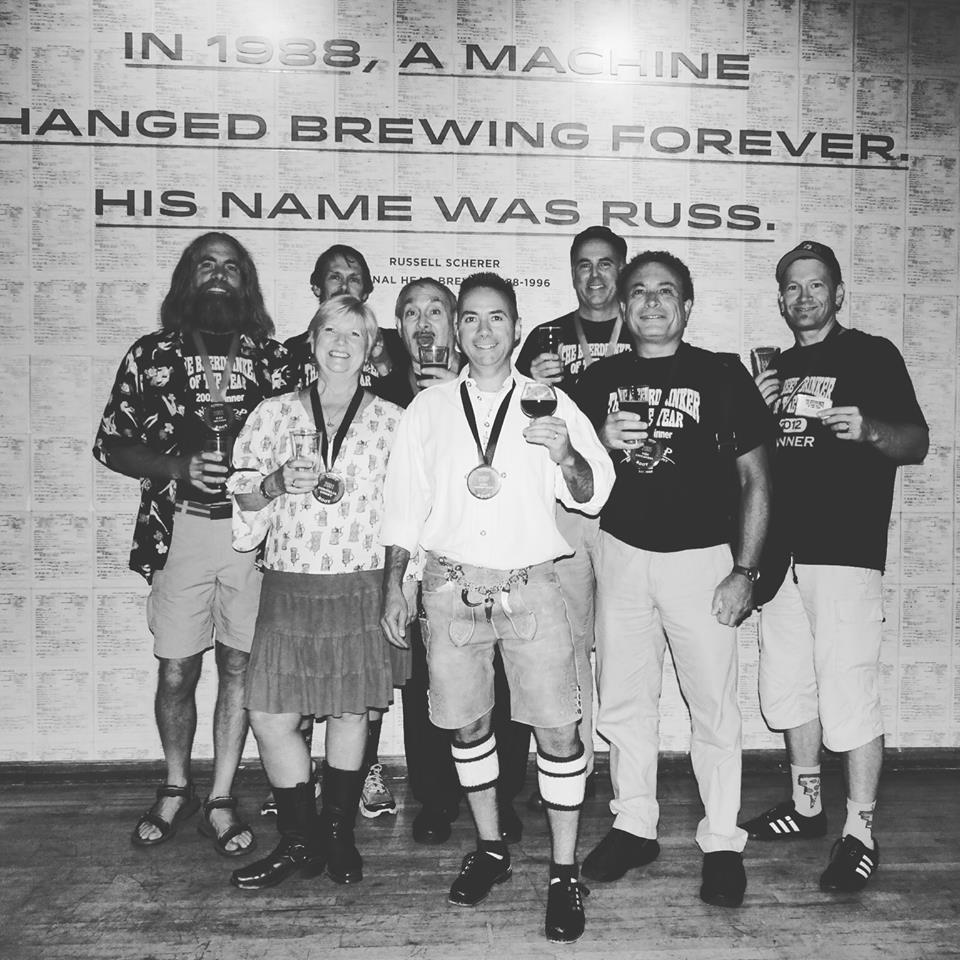 Right before the GABF kickoff in September, the Wynkoop hosted a nice welcome back
party for previous BDOY winners.
Beer legends Warren Monteiro (2013), J. Wilson (2012), Phil Farrell
(2011), Tom Ciccateri (2005), Ray McCoy (2003), Gary Steinel (2002), and Cornelia
Corey (2001) were in attendance. (Yes, I made it too...) It was a great reunion with plenty of Koop-GABF speciality beers on tap, as well as some friendly beer-related challenges to pit the former winners against each other.
Right before the GABF kickoff in September, the Wynkoop hosted a nice welcome back
party for previous BDOY winners.
Beer legends Warren Monteiro (2013), J. Wilson (2012), Phil Farrell
(2011), Tom Ciccateri (2005), Ray McCoy (2003), Gary Steinel (2002), and Cornelia
Corey (2001) were in attendance. (Yes, I made it too...) It was a great reunion with plenty of Koop-GABF speciality beers on tap, as well as some friendly beer-related challenges to pit the former winners against each other.
The reunion officially kicked off the PR campaign and search for the 2016 Beerdrinker
of the year. (I've posted the official press release below for your reference.)
Now the question is, are you ready to throw your hat in the ring for the 2016 title?
Now the question is, are you ready to throw your hat in the ring for the 2016 title?
The
prizes will be the same as years past, but there is a new twist to the application process. In addition to a written essay (“beer
resume”) free-beer-for-life-seekers can also submit a two-minute video
application. Either option will suffice. There are samples on
the web site if you want to see how the video works.
Apply Now
With that said, time is running out. Here are some key dates
to remember:
- Applications are due by 12 am on February 1st, 2016. (Since the general beer-public can vote on the submissions, the sooner you apply the better. Voting will only be one criteria used to pick the three finalists, but it never hurts to have a strong following.)
- The Finals will be held on Saturday, April 2nd at the Wynkoop Brewery. This is where the three finalists will be flown to Denver and a new winner will be crowned.
If you
love beer, and I know you do, I encourage you to give it a shot! I did and it has served me well.
To apply
visit http://wynkoopbdoy.com. If you want help or have any
questions do not hesitate to contact me.
For more information read the official press release:
“We are thrilled to bring back our beloved Beer Drinker of the Year competition in its new form this year,” says Breckenridge-Wynkoop Vice President of Marketing Brooke Salazar. “The contest is intended to give the nation’s biggest beer enthusiasts a platform to showcase their knowledge and passion for beer. By incorporating a social aspect to the competition through video submissions and public voting, we hope our participants will get creative, have fun and tell all of their friends why they should be the 2016 Beer Drinker of the Year!”
The Beer Drinker of the Year 2016 contest is open to U.S. residents ages 21 and older who are available to fly to Denver for the National Finals Feb. 26-28, 2016. Travel expenses will be paid for the top three finalists, who will be announced by the Wynkoop Brewing Co. judging panel by Feb. 1, 2016. The 2016 Beer Drinker of the Year will be crowned at the National Finals event on Feb. 27, 2016, which will be open to the public to attend.
Past Beer Drinker of the Year Cody Christman encourages other beer lovers to apply. “Winning Beer Drinker of the Year was a huge honor,“ he says. “It’s a chance to see what you know and go up against the best at the most prestigious beer competition in the nation with the biggest prize of all (free beer!) at Colorado’s first brewpub. Who wouldn’t want that?”
Visit www.wynkoopbdoy.com for more information or to submit an entry.
About Wynkoop Brewing Co:
Wynkoop is Colorado’s O.G. Brewpub, home to tastemakers and rulebreakers, bushwhackers and envelope pushers. For almost three decades we’ve been brewing handcrafted beer in our modest basement brewery underneath Denver’s largest pool hall. Over the years our neighborhood has transformed and Colorado’s craft beer industry has exploded. And Wynkoop is still here, serving cold beer to warm friends.
Media Contact:
Lizzie Sneed dfine Branding 720.328.6971 lizzie@dfinebranding.com
Wynkoop Brewing Co. announces return of
Beer Drinker of the Year competition
2016 marks the contest’s 18th year
DENVER — Oct. 16, 2015 — Wynkoop Brewing Co. has the craft beer community buzzing over its announcement that the Beer Drinker of the Year competition is returning in 2016. After taking a break for the last two years, the popular national contest is back and better than ever.
The Beer Drinker of the Year is not only someone who enjoys, appreciates (and drinks) beer, but knows a great deal about beer, how it's made, its legend and lore and can demonstrate the range and depth of their beeriness.
So let the search for America’s most passionate beer drinker begin. Beer fanatics have until midnight on January 31, 2016 to enter their submissions to vie for prizes like free beer for life at Wynkoop Brewing Co., the chance to work with Wynkoop’s head brewer to have their beer recipe brewed at Colorado’s oldest brewpub, and the serious bragging rights that accompany the “Beer Drinker of the Year 2016” title.
To enter the contest, beer enthusiasts are asked to upload a two-minute video (or written essay/beer-resume) describing why they should be crowned the Beer Drinker of the Year. Videos will be judged based on entrants’ creativity, expressed knowledge of craft beer history, and demonstration of how they live and breathe beer culture.
Applicants shouldn’t wait until the last minute to enter their submissions, though. Video votes will count toward the review and consideration of this year’s submissions, so entrants are encouraged to share their videos on social media using hashtag #BDOY2016 to gain votes.
The video submissions and public voting are a departure from prior years’ written entry contest format. The competition, which started in 1997 and took a break between 2013-2015 for a rebrand, has experienced growing national recognition as one of the country’s top beer competitions.
2016 marks the contest’s 18th year
DENVER — Oct. 16, 2015 — Wynkoop Brewing Co. has the craft beer community buzzing over its announcement that the Beer Drinker of the Year competition is returning in 2016. After taking a break for the last two years, the popular national contest is back and better than ever.
The Beer Drinker of the Year is not only someone who enjoys, appreciates (and drinks) beer, but knows a great deal about beer, how it's made, its legend and lore and can demonstrate the range and depth of their beeriness.
So let the search for America’s most passionate beer drinker begin. Beer fanatics have until midnight on January 31, 2016 to enter their submissions to vie for prizes like free beer for life at Wynkoop Brewing Co., the chance to work with Wynkoop’s head brewer to have their beer recipe brewed at Colorado’s oldest brewpub, and the serious bragging rights that accompany the “Beer Drinker of the Year 2016” title.
To enter the contest, beer enthusiasts are asked to upload a two-minute video (or written essay/beer-resume) describing why they should be crowned the Beer Drinker of the Year. Videos will be judged based on entrants’ creativity, expressed knowledge of craft beer history, and demonstration of how they live and breathe beer culture.
Applicants shouldn’t wait until the last minute to enter their submissions, though. Video votes will count toward the review and consideration of this year’s submissions, so entrants are encouraged to share their videos on social media using hashtag #BDOY2016 to gain votes.
The video submissions and public voting are a departure from prior years’ written entry contest format. The competition, which started in 1997 and took a break between 2013-2015 for a rebrand, has experienced growing national recognition as one of the country’s top beer competitions.
“We are thrilled to bring back our beloved Beer Drinker of the Year competition in its new form this year,” says Breckenridge-Wynkoop Vice President of Marketing Brooke Salazar. “The contest is intended to give the nation’s biggest beer enthusiasts a platform to showcase their knowledge and passion for beer. By incorporating a social aspect to the competition through video submissions and public voting, we hope our participants will get creative, have fun and tell all of their friends why they should be the 2016 Beer Drinker of the Year!”
The Beer Drinker of the Year 2016 contest is open to U.S. residents ages 21 and older who are available to fly to Denver for the National Finals Feb. 26-28, 2016. Travel expenses will be paid for the top three finalists, who will be announced by the Wynkoop Brewing Co. judging panel by Feb. 1, 2016. The 2016 Beer Drinker of the Year will be crowned at the National Finals event on Feb. 27, 2016, which will be open to the public to attend.
Past Beer Drinker of the Year Cody Christman encourages other beer lovers to apply. “Winning Beer Drinker of the Year was a huge honor,“ he says. “It’s a chance to see what you know and go up against the best at the most prestigious beer competition in the nation with the biggest prize of all (free beer!) at Colorado’s first brewpub. Who wouldn’t want that?”
Visit www.wynkoopbdoy.com for more information or to submit an entry.
About Wynkoop Brewing Co:
Wynkoop is Colorado’s O.G. Brewpub, home to tastemakers and rulebreakers, bushwhackers and envelope pushers. For almost three decades we’ve been brewing handcrafted beer in our modest basement brewery underneath Denver’s largest pool hall. Over the years our neighborhood has transformed and Colorado’s craft beer industry has exploded. And Wynkoop is still here, serving cold beer to warm friends.
Media Contact:
Lizzie Sneed dfine Branding 720.328.6971 lizzie@dfinebranding.com
Friday, February 13, 2015
Beerdrinker of the Year To Resume in 2016
I wanted to fill you in on the BDOTY event that has been on hiatus since the 2013 National Finals. We'll I have good news, it is coming back! See the message below that I sent to friends on an email list I run.
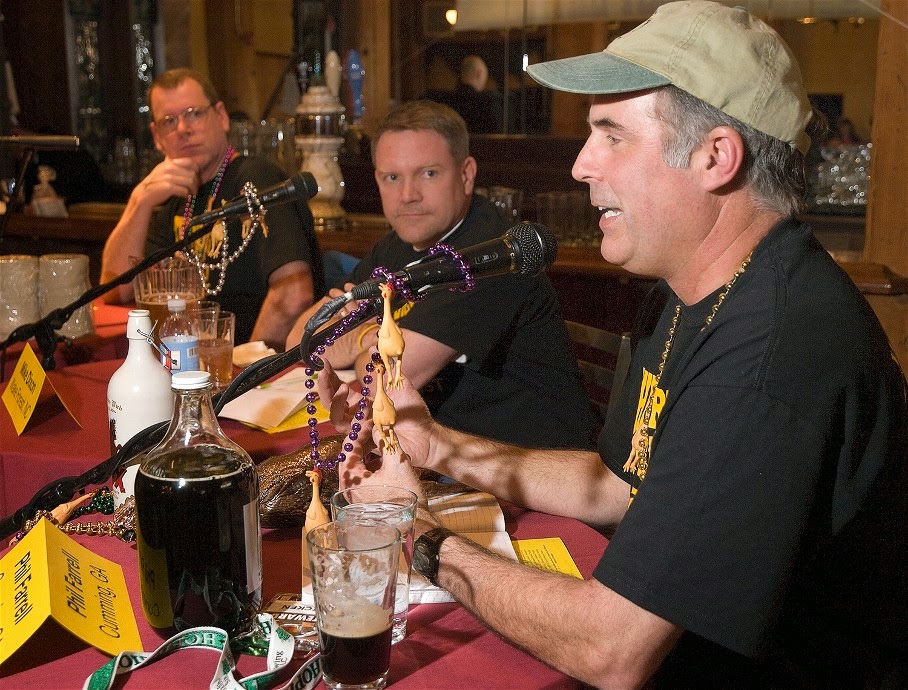
Kooplisters,
I've got some good news and wanted to give an update about the Wynkoop. (Sorry Jim - no they are not bringing the Lamb Sliders back. Not yet anyway!)
Yesterday I met with Lee Driscoll (Wynkoop-Breckenridge CEO), their Director of Corporate Events, the Koop GM, the Head Brewer, and two of their beer sales directors. We met to discuss the Beerdrinker of the Year event, which is going to come back.
Here is the tentative plan. As you know there has been quite a bit of investment over the past year. (bathrooms, etc.) The Koop has also purchased the former Comedy Works space. They are turning that room into a barrel aging storage area and private tasting room. The plan is to have that room open in time for the GABF.
The plan is to have a "former BDOTY winner reception" on the Wednesday night of GABF weekend in conjunction with a grand opening of that barrel room. This event will re-launch the Beerdrinker of the Year event. There will be PR, buzz generation, etc. It will also kick off the calling for BDOTY resumes.
Then the BDOTY National Finals event will be back on track for 2016. Tentatively scheduled for the Saturday after Presidents' Day next year - February 20th 2016.
So things can change, and nothing is done until it is done, but this is great news. And as the event dates approach I would appreciate your help in promoting these event. (You've always been great at that in the past - thanks!) That will help in maintaining a long term commitment for cool events like this one!
See you tomorrow night at the Koop!
Cody
Wednesday, December 10, 2014
The Barrelworks at Firestone Walker
Last summer I received a letter from Frontier Airlines warning that our frequent flier miles were about to expire. Since Frontier pulled out of Billings we have had little reason to use them anymore. But Joycelyn had an idea to put our miles to use and take a long weekend trip to Santa Barbara California. For years we've talked about visiting her cousin and his wife there, so this was a perfect opportunity to take a quick trip to see family and visit some new breweries.
Firestone Walker Brewing
Whenever I travel to a new location I do some searching for breweries in the area. I knew the Firestone Walker Brewing Company was based in southern California, but did not realize how close they were to Santa Barbara.
I first discovered Firestone Walker beers on a trip to Northern California about six years ago. Since that time their bottles have become readily available in Colorado. I really enjoy this brewery because their staples are excellent examples of traditional British Ales.

Firestone Walker was founded in 1996 and has grown rapidly ever since - racking up much praise along the way. Their accolades include individual & overall brewery awards from The World Beer Cup, the Brewers Association, and the GABF. It is also worth noting that Firestone Walker is very unique in their production process. They are one of only two breweries that still employ the famous Burton Union System (from Burton upon Trent north of London) - a barrel fermentation and blow off system that recirculates wort.
Santa Ynez Valley
A short drive from Santa Barbara is the town of Buellton where the Firestone Walker Brewery is located. (They also have a facility in Paso Robles) To get there follow highway 154 and climb north out of Santa Barbara up into the mountains. You will ultimately drop into the picturesque Santa Ynez Valley.
The unique geography of Santa Ynez is created by the only significant stretch of east-west Pacific Ocean coastline between Alaska and Mexico. This anomaly contributes to the valley's Mediterranean climate. The rolling hills, orchards, flora and even soil reminded me of the Tuscany region of Italy.
There are a number of quaint villages in the valley. After you pass the boutique wine tasting rooms in Los Olivos stop in the beautiful Danish community of Solvang and grab a plate of Aebleskiver. There you can also visit the historic Santa Ines Mission. But you will eventually make your way to Buellton for a visit of the Firestone Walker Brewery. The movie Sideways popularized this area for wine lovers, now the rapid rise of FW is doing the same for beer.

The Barrelworks
Firestone Walker's brewery is a large building right off of Highway 101. You can't miss it. The facility serves as both a brewery and a restaurant. When we arrived the place was buzzing with families out for an early evening dinner. There were numerous kids running around. This is an ideal spot for locals to sit down with some good food and enjoy fresh, craft beer.
But there was another section of the building walled off from the restaurant called the "Barrelworks." Having an inside tip we passed the main bar and headed right for this not-so-well-marked enclosure. The Barrelworks offers $3 three ounce samples of a number of special FW offerings. And it does so in a spectacular setting.
The quaint area is walled off from the restaurant and provides a close up view of FW's barrel storage facility. There are a number of barrels of different shapes, sizes and origins... even a large foudre. (I've seen these in wineries near Napa. Redwood?) The stainless steel bar and towering wood vessels create the perfect setting to sample some very special ales.
There were about 20 different beers on tap the day we visited. They were split into two categories: "Wild Ales" and "Strong Ales." Every beer served had spent at least one year in wood. In addition, the Barrelworks offered a few verticals allowing the drinker to see how a specific style of beer matured over one, three, or more years.
It was obvious that Firestone Walker takes a lot of pride in this bar. They had every detail covered down to extensive notes on each beer served. And the servers were all required to have Cicerone certifications.
There was one thing that surprised me. It was "happy hour" time on a Friday afternoon, and we were the only patrons in the room. I was shocked. This was a beer lover's dream come true and it was like the clientele in the restaurant didn't even know this area of the brewery existed. Buellton is a small town which may explain the lack of interest in the "beer geek" area. I thought to myself, if this place was in LoDo Denver, or Santa Barbara's Funk Zone, it would be too packed to get a seat.
Lil Opal 2014
I got the chance to sample four beers in the Barrelworks: the 2013 vintage of their American Wild Red (Agrestic), the Sucaba Barleywine, their XVI Strong Ale, and finally a 2014 Saison called Lil Opal. I'll share the tasting notes I jotted down on the Saison.
Lil Opal is a brett accented Saison aged for over a year in 75% French / 25% American oak. It weighs in at a respectable 5.9% abv. It poured a cloudy pumpkin orange with a tight off-white cap. The aroma was dominated by fresh oak with a slight pineapple tartness. The flavor was much more subtle than the nose would suggest. Lil Opal had a mild, fruity flavor with perhaps a touch of golden syrup character that propped up the body. It finished quite dry which is to be expected from any beer fermented (wholly or in part) by brettanomyces. Overall this was an excellent Farmhouse Ale with a distinct cellar character.
The other beers I sampled were equally as impressive. If you love barrel aged strong and/or sour beers, do not pass by pass this part of California without a visit to FW's Barrelworks!

Figueroa Mountain Brewery
For those that did not get their fill visiting Firestone Walker, there is another brewery in this small town. Figueroa Mountain is short drive across the 101 located in a light industrial neighborhood. They make the most of their asphalt and concrete setting. Inside, at the foot of massive fermenting vessels, they have a small bar and tasting room with about 20 beers on tap. And on nice days the beer garden outside is a great place to enjoy a sampler or couple of pints. Their beers range from lagers and Kölsch to wheat beers, and a number of ales - from Pale Ale to Brown. As the brewery moniker suggests their beers are named after local landmarks.
Figueroa Mountain also has a satellite pub in Santa Barbara's Funk Zone not far off the beach. They offer a similar selection as the brewery. Show up early if you want to get a seat however!
The unique geography of Santa Ynez is created by the only significant stretch of east-west Pacific Ocean coastline between Alaska and Mexico. This anomaly contributes to the valley's Mediterranean climate. The rolling hills, orchards, flora and even soil reminded me of the Tuscany region of Italy.
There are a number of quaint villages in the valley. After you pass the boutique wine tasting rooms in Los Olivos stop in the beautiful Danish community of Solvang and grab a plate of Aebleskiver. There you can also visit the historic Santa Ines Mission. But you will eventually make your way to Buellton for a visit of the Firestone Walker Brewery. The movie Sideways popularized this area for wine lovers, now the rapid rise of FW is doing the same for beer.
The Barrelworks
Firestone Walker's brewery is a large building right off of Highway 101. You can't miss it. The facility serves as both a brewery and a restaurant. When we arrived the place was buzzing with families out for an early evening dinner. There were numerous kids running around. This is an ideal spot for locals to sit down with some good food and enjoy fresh, craft beer.
But there was another section of the building walled off from the restaurant called the "Barrelworks." Having an inside tip we passed the main bar and headed right for this not-so-well-marked enclosure. The Barrelworks offers $3 three ounce samples of a number of special FW offerings. And it does so in a spectacular setting.
The quaint area is walled off from the restaurant and provides a close up view of FW's barrel storage facility. There are a number of barrels of different shapes, sizes and origins... even a large foudre. (I've seen these in wineries near Napa. Redwood?) The stainless steel bar and towering wood vessels create the perfect setting to sample some very special ales.
There were about 20 different beers on tap the day we visited. They were split into two categories: "Wild Ales" and "Strong Ales." Every beer served had spent at least one year in wood. In addition, the Barrelworks offered a few verticals allowing the drinker to see how a specific style of beer matured over one, three, or more years.
It was obvious that Firestone Walker takes a lot of pride in this bar. They had every detail covered down to extensive notes on each beer served. And the servers were all required to have Cicerone certifications.
There was one thing that surprised me. It was "happy hour" time on a Friday afternoon, and we were the only patrons in the room. I was shocked. This was a beer lover's dream come true and it was like the clientele in the restaurant didn't even know this area of the brewery existed. Buellton is a small town which may explain the lack of interest in the "beer geek" area. I thought to myself, if this place was in LoDo Denver, or Santa Barbara's Funk Zone, it would be too packed to get a seat.
Lil Opal 2014
I got the chance to sample four beers in the Barrelworks: the 2013 vintage of their American Wild Red (Agrestic), the Sucaba Barleywine, their XVI Strong Ale, and finally a 2014 Saison called Lil Opal. I'll share the tasting notes I jotted down on the Saison.
Lil Opal is a brett accented Saison aged for over a year in 75% French / 25% American oak. It weighs in at a respectable 5.9% abv. It poured a cloudy pumpkin orange with a tight off-white cap. The aroma was dominated by fresh oak with a slight pineapple tartness. The flavor was much more subtle than the nose would suggest. Lil Opal had a mild, fruity flavor with perhaps a touch of golden syrup character that propped up the body. It finished quite dry which is to be expected from any beer fermented (wholly or in part) by brettanomyces. Overall this was an excellent Farmhouse Ale with a distinct cellar character.
The other beers I sampled were equally as impressive. If you love barrel aged strong and/or sour beers, do not pass by pass this part of California without a visit to FW's Barrelworks!
Figueroa Mountain Brewery
For those that did not get their fill visiting Firestone Walker, there is another brewery in this small town. Figueroa Mountain is short drive across the 101 located in a light industrial neighborhood. They make the most of their asphalt and concrete setting. Inside, at the foot of massive fermenting vessels, they have a small bar and tasting room with about 20 beers on tap. And on nice days the beer garden outside is a great place to enjoy a sampler or couple of pints. Their beers range from lagers and Kölsch to wheat beers, and a number of ales - from Pale Ale to Brown. As the brewery moniker suggests their beers are named after local landmarks.
Figueroa Mountain also has a satellite pub in Santa Barbara's Funk Zone not far off the beach. They offer a similar selection as the brewery. Show up early if you want to get a seat however!
Thursday, May 1, 2014
16 Beer Misconceptions (Part 2 of 2)
In my travels and discussions over the years with other beer lovers I've stumbled across some perceptions that are a bit off. They are all basically harmless, but nonetheless it doesn't hurt to point them out. Some of the topics on the list are general, some are specific, and others quite random.
This blog takes a look at 16 common beer-related misunderstandings relating to our favorite drink. I've split this into two posts. This second entry will discuss the final eight.
Click here to read Part 1 of 2.
I'm sure I missed dozens. Do you have any to add? Feedback is always welcome!
To continue...
9) All Trappist Ales come from Belgium. When I think Trappist, I think Belgium. But not all Trappist beers are from there. Koningshoeven is brewed north of the border in the Netherlands. And two years ago a new player entered the market - Stift Engelszell from Austria. Out of the eight Trappist breweries, the remaining six are indeed from Belgium - three from the French speaking south (Orval, Chimay, and Rochefort) and three from the Flemish north (Achel, Westmalle, and Westvleteren). For more about Trappist breweries please reference my blog post from last year.
(After posting this I was notified by Jim E. that St. Joseph's Abbey in Spencer, Massachusetts also joined the list. I knew they were coming, but didn't realize their Spencer Trappist Ale was out yet. Good catch Jim! And we can all welcome the USA into the Trappist ranks.)

10) Wine is harder to make than beer. I'm not out to start a fight here. Nor am I saying beer is better than wine. Nor am I saying fine wine is easy to make. But fundamentally, wine is fairly simple. Grapes already contain sugar, and the skins are covered with yeast. (I know, maybe not the yeast you want, but…) Press the grapes, and let it ferment!
Beer is produced by the fermentation of sugars derived from starch-based material. Typically barley, but also wheat, rye, and to a lesser extent other grains. In other words, a seed needs to be malted and mashed in order to get to the sugars that wine makers start with from nature. Malt production and mashing take precise conditions such as moisture content, pH and temperature. It is a fairly complex and scientific process to perfect the production of a good wort.
Beer may be a commoner's drink, and wine may have an air of nobility, but in reality your Pilsner may have taken more skill to produce than your Pinot.
11) Germans drink their beer warm. The British are famous for drinking "warm and flat" Ales, but the Germans don't drink their beer warm. I would call it cold/cool. Not ice cold beer out of a cooler like Americans drink at a tailgate, but definitely not warm.
12) Brettanomyces is bacteria. Actually brett is a form of super-attenuating wild yeast. It is not uncommon for brettanomyces to end up in beers that are also partially fermented by bacteria, so some mistakenly think it falls into this group. Styles such as Lambic and Sour Red Ales are examples of beers fermented with "traditional" brewers yeast, brettanomyces and acid producing bacteria.
If you want to learn more about this much loved bug, read my November 2012 entry on Anchorage Brewing and brettanomyces.
13) Light lagers are not good beers. I am not the biggest fan of mass-produced light lagers. (Though I don't object. My father grows 2-row barley for Coors.) Light lagers, whether mass produced or brewed by your local craft brewer, are in my opinion the most difficult beers to perfect.
Think of a delicate Helles, or brilliantly fresh Pilsner. Those beers need to be clean to allow the yeast to get out of the way and showcase the malt and hops. Any minor flaw will jump out in these beers. Dark ales and hoppy beers on the other hand are more forgiving. Fermentation flaws often get buried underneath stronger flavors. When is the last time you had a "flawed" Porter?
 |
| Kloster Mülln (Monastery) in Austria |
I'm not saying it doesn't take skill to make that over-the-top IPA, I'm just saying light lagers are the most challenging beers to brew. That is my opinion anyway.
14) Beer and religion don't mix. I think this perception comes from religious teetotalers. We all know one. But I completely object to this generalization. If not for the church beer would definitely not be what it is today. Monks were of the few learned people of their times, and their science, experimentation and documentation helped perfect brewing practices. We owe our great ales & lagers largely to their effort, trials and tribulations. And think of the most sought after beers today. Tops on that list has to be Westvleteren - brewed by monks.
Additionally, religion would not be as strong as it is without beer. The church (often intertwined with the ruling powers) controlled beer production and distribution in much of the old world. This strengthened their establishment.
Throughout history religion and beer have gone hand in hand.
15) Bock beer comes from the bottom of the barrel. I've even read this in reputable bar guides. I don't even really know what it means. Is the thought that the stronger/thicker beer settles to the bottom?
Bock beers are simply stronger, higher gravity beers. They are brewed like any other beer. (By German law to be classified as a Bock the wort requires a minimun starting gravity of 1.064, and 1.072 for a Doppelbock.)
The only other explanation for this misnomer that I can think of is that most Bock beers are lagers. (though there are Weizenbocks) Germans call lagers untergärig, which means "bottom fermented." This simply refers to the slow, cool fermentation carried out by yeast that have settled. In the old days I suppose
 |
| "Funky" Cantillon Lambic in Belgium |
16) All sour beers are awesome! Just because a beer is funky or sour does not mean it is good. Just like hoppy beers, sour beers still require balance. And some beer souring bacteria (like enterobacter) are down right sickening.
Some of the world's greatest beers make use of spontaneous fermentation and/or barrel aging. These practices lead to inoculation by brettanomyces and other souring microorganisms. But funk alone does not guarantee greatness - or even drinkability. Sour beer brewers should prepare to get an ear full if you want a Belgian lambic brewer to critique your beer!
Well that concludes my list of 16. Did I miss any? I'm sure you have some to add… please comment!
Wednesday, April 16, 2014
16 Beer Misconceptions (Part 1 of 2)
In my travels and discussions over the years with other beer lovers I've stumbled across some perceptions that are a bit off. They are all basically harmless, but nonetheless it doesn't hurt to point them out. Some of the topics on the list are general, some are specific, and others quite random.
This blog takes a look at 16 common beer-related misunderstandings linked to our favorite drink. I've split this list into two posts. This first entry will discuss one through eight, and in two weeks I will finish off nine through 16.
I'm sure I missed dozens. Do you have any to add? Feedback is always welcome!
Here we go...
1) Fresh beer is better. Anheuser Busch has spent millions of dollars drilling this into our heads. Why? Partly because for beer, being like bread, this theory is typically correct. But mostly because their beer turns over so fast they don't need to worry about anyone buying an old Budweiser. Imports, on the other hand, are often three months old before they get to the US. It is a smooth way to get consumers to favor their product.
As a rule of thumb, filtered, light (in alcohol) beers are best fresh. But many bottle conditioned, strong beers are worth laying down and will build character - some improving for several years.
2) Fruit and honey make beer sweet. This misconception probably stems from the fact that many fruit and/or honey beers are sweet. But that sweetness typically comes from artificial flavoring or added sugars.
The sugars in honey and fructose from fresh fruit are simple sugars and readily fermentable by brewer's yeast. They tend to dry beer out, not sweeten it. (Think of a dry Belgian Triple, typically made candy sugar added to the boiler.) Honey and fruit may add character, but not body nor sweetness after being fermented out.
I've had numerous pilsner clones that are dry hopped, and most of them are good, but they do not taste true to style. And just because a beer exhibits a great hop aroma and flavor that does not necessarily mean it was dry hopped.
4) Dark beers are "stronger" than light beers. In my Beer 101 class I have a quiz question. Which beer contains more alcohol: a) Miller Lite or b) Guinness Stout? Lite is 4.3% abv, while Guinness is 4.2%. Darkness in beer comes from highly kilned malts such as crystal, chocolate, black patent and roasted barley. It does not take a lot of roasted barley to turn a beer quite dark.

Alcohol comes from the amount of sugar in the wort. That sugar could be derived from light or darker malts. Light beers can be quite strong (IPAs, Triples) and dark beers can be quite weak (Mild, standard Stout).
5) All of Germany is Bavaria. When most Americans think of Germany they have images of Maß swilling groups of Lederhosen-wearing men in big tents. And this is what you would see if you were to visit Oktoberfest in Munich. But wear your Lederhosen up north where Beck's or Wahrsteiner are brewed and you'll get laughed out of town.
Bavaria is the undisputed beer capital of Germany. From per capita consumption, number of breweries, festivals, etc. Bayern is the place to be. But west and northern Germany also have strong beer traditions (think Pilsner, not Helles), though culturally much different than the stereotypical American image of Bavaria.
6) Jimmy Carter was a lousy president. Well, I don't really want to get into politics here. And trust me, I'm not going to stick up for Carter's record. But not all four years of his presidency went to waste. In 1978 Jimmy Carter did sign a law that essentially legalized homebrewing at the federal level. That is why many homebrew shops to this day will have a picture of Jimmy Carter with a halo over his head.

(On a side note, even after this law passed, many states still barred or limited Homebrewing in one manor or another. The American Homebrewers Association has lobbied for years to make homebrewing legal throughout the United States. And last year they finally achieved their goal. Mississippi and Alabama were the last two states to legalize homebrewing. The Alabama law went into effect in May of 2013 and the Mississippi law went into effect in July of 2013. Nice work AHA!)
7) Winning the Beerdrinker of the Year competition is about how much or how fast one can drink. Many people have asked me questions like, "How much did you have to drink?" For those that have been to the competition, they know chugging beer has nothing to do with the honor. BDOTY is about passion, knowledge, sensory perception, being an ambassador, and a bit of wit. I think that sums up the major points. To give people an idea of what it takes to compete I refer them to my Beer Resume.
8) Homebrew is not as good as craft beer. Not many of the craft brewers in the US are classically trained. Most graduate from the homebrewer ranks and go pro. In theory these guys would be the best of the best.
With that said, home brewers have some advantages over the "big" guys. Brewing six-gallon batches of beer instead of 600 allows the little guys to experiment more. In addition, money is no object. What is another 40% expense in ingredients, when it is still relatively cheap to brew your own, and time is typically the homebrewer's biggest investment.
Finally, home brewers are not bound by inflexible brewery configurations. Expensive craft systems are typically of high quality, but also may limit process flexibility. Homebrewers can step mash, decoction mash, make their own hopbacks, etc. There is just a lot more options from batch to batch on a home system.
I'd put the best homebrews up against the best craft beers any day. Are there any judges out there that have worked both the AHA Nationals and the GABF? I'd like to hear your comments.
Well, that wraps up my first eight beer-related misconceptions. Come back in two weeks for the second half of this column. In the meantime enjoy a nice Maibock to celebrate the break of spring!
Thursday, October 10, 2013
Pro-Am Saison
GABF or bust
I was lucky enough again this year to collaborate with the Wynkoop on a GABF Pro-Am entry. For those of you that are not aware, The Great American Beer Festival is the world's largest beer event (based on number of beers available) and takes place every fall in Denver - this year October 10-12th. (http://www.greatamericanbeerfestival.com/) A few years ago the GABF added a new "Pro-Am" match up. This competition allows homebrewers to partner with a craft brewery to scale up one of their BJCP-certified award-winning beers. Out of the 3,000+ beers available at the GABF, there are only 100 Pro-Am entries. Those 100 are judged against each other for gold, silver, and bronze medals. In addition, the winner is eligible to compete against all of the other beers at the GABF for best in show.


The great yeast experiment
Belgian Saison is a broad category of beers with roots in Wallonia - the southern, French-speaking part of Belgium. Saisons range from golden to amber, light to strong, spiced to unspiced. But most are dry and highly carbonated. Another characteristic I would assign to the Saison style is, like many other Belgian ales, it has a strong yeast character. Yeast selection and how those yeast are handled often defines the finished product.

Since yeast character was so critical to the beer we were looking to produce, Andy suggested we partake in a yeast experiment to identify the perfect strain for our Pro-Am entry. We split up scouring different yeast suppliers for various Saison, Farmhouse, Biere de Garde, and Ardennes strains. In the end we had rounded up seven different varieties. One Friday after work I headed to the Wynkoop as usual. That day Andy had brewed a light wort for one of their beers, and pulled off 14 one-gallon jugs of the sweet liquid for our experiment. After I arrived, we got together and pitched half of each strain into two jugs - one to be fermented warm, while the other cool.
Two weeks later the test batches had fermented out and it was time to sample each and seek out the starter with the best character for the type of Saison we were shooting for. It is worth noting that temperature has a profound impact on how yeasts behave. It changes the concentration of phenols & esters, impacts turbidity, influences color, and alters attenuation - to name a few qualities. It definitely was a learning experience for me. These are things I already knew, but never had the resources to attempt a yeast experiment on this scale.

My recipe
As most of you know, I tend to be a fan of simplicity. Some of the best beers in the world are single malt (Helles, Dunkles, etc.), and/or single hop beers (Saaz for Pilsners - as an example). Plenty of complexity can be achieved with simplicity. Well... this recipe runs contrary to that line of thinking. Sometimes there is nothing wrong with brewing one of those "everything but the kitchen sink" type of beers.
My Saison was inspired partially by Karmeliet Tripel, which employs three cereal grains in the mash - barley, wheat and oats. I also used these three grains, as well as a number of specialty malts to round out the grist. This recipe has a little bit of everything. Here it is (scale to your system and needs):
Grain Bill:
- 71% Weyermann Pils
- 8% Weyermann Wheat Malt
- 5% Quaker Oats
- 5% Gambrinus Light Munich
- 4% Gambrinus Honey Malt
- 3% Weyermann Crystal Wheat
- 2% Weyermann CaraMunich III
- 2% Castle Special B
Mash for 30 minutes at 122 degrees F then raise to 150 degrees F for 40 minutes. Mash out as needed to suite your system.
Boil for 75 minutes:
- 1st hop addition: sufficient Mt. Hood or Hallertauer to result in 15 IBU (60 minutes)
- 2nd hop addition: sufficient Mt. Hood or Hallertauer to result in 15 IBU (30 minutes)
Very lightly spice with fresh crushed coriander at knockout
Fermentation:
Ferment in the low 70s with Wyeast 3711 - French Saison.
Target gravities:
O.G. 1056
F.G. 1007 (try to really dry it out)
Tres Bon Saison (name of our beer)
So how did our Pro-Am experiment turn out? What does it look like, smell like, how does it taste? Not telling! You'll have to judge for yourself. This beer will be on tap Saturday at the GABF Pro-Am section (usually right up front near the entry), and it will also be available at the Wynkoop until supplies last. I hope you get a chance to sample a few, and I welcome your feedback. Enjoy!
Saturday, September 28, 2013
Birra in Italy
Last week my wife and I returned from a trip to Europe. On this vacation we spent a majority of our time in idyllic Italy. A visit to Italia has been on our list for over a decade now, and we finally made it happen.
I must admit the trip was not planned around beer - rather sightseeing, history, and leisure, but like all of our travels beer ended up in many of our activities. So with that said, this blog is not based on extensive research into the Italian beer culture, rather a more passive, tourist's perspective on the scene.
In preparation for our trip I naturally started reading up on Italy, as well as solicited advice from friends that have been there before, and in one case born and raised there. I knew that wine was the undisputed drink of choice among Italians. Italy is located squarely in the wine-belt. (Tuscany is better suited to growing grapes than barley or hops.) But I had also heard from many Italy-visiting-veterans that, like other parts of the world, the craft beer movement was taking hold there too.
When in Rome...

Our first stop on this trip was Rome. Here is some background. We worked all day Friday, caught an evening flight to Europe (Rome via Frankfurt), and arrived on Saturday afternoon. After checking into our B&B we took the subway to the Spanish Steps and walked down to the Trevi Fountain. After fighting our way through all the other tourists, we headed toward Piazza Navona. Both of us were hungry, tiered, and thirsty, so we stopped at a quaint pizzeria in a narrow alley. We sat at a small table out front, and after two long days we finally got a chance to relax. This place really hit the spot. The salami pizza we ordered was excellent, and never before has a Nastro Azzurro tasted so good! We were hot and the beer was cold and refreshing. Weather is a major influencing factor on local styles around the world - and Italy's Mediterranean climate steers people toward beers like Peroni.
No Open Container?
There was another interesting thing about Italian regulations that I quickly discovered. When purchasing a bottle at the grocery store, or at a cart on the street, the merchant typically asked if I wanted it opened. That is right, walking around with an open container is no problem over there. This was actually very nice. We could continue to do more sight seeing after dinner, with a beer in hand, and not worry about being questioned by the authorities.
One minor warning when purchasing beer - just be cautious of "Doppio Malto" beers that are ubiquitous at these markets and stores. The name conjures notions of Doppelbock (think Moretti La Rossa), but many of them, some foreign, more closely resemble malt liquor (think Colt 45) than Salvator. Otherwise, drink away and have fun getting lost in the maze of Rome's narrow streets.
Craft Beer Scene
 |
| Caffetteria Aristocampo |
I admit, I spent more time at the Vatican and Colosseum in Rome than seeking out beer havens, so take my less-than-extensive-list of recommendations with a grain of salt, but there are a few places I would suggest visiting. And the nice thing about Rome, these establishments are all walkable and not too far from the center of town.
- Bir & Fud (http://birandfud.it) - Note, does not open until 6:30 pm.
- Ma Che Siete Venuit A Fa' (http://football-pub.com) "What did you come here for?"
- Caffetteria Aristocampo - in front of the Santa Maria della Scala church on Via della Scala. In addition to Italian staples, they serve Peroni Grand Reserve and Franziskaner Weissbier.
- Open Baladin Roma (http://www.baladin.it/) - In the lively Campo de Fiori area
North to Tuscany
After three days in Rome we rented a car and drove north into Tuscany. We stayed at a picturesque winery on a remote hillside near Siena. This location was our base for several day trips and excursions. The countryside of Tuscany was beautiful, carpeted by vineyards and hilltops capped with medieval towns. From Siena we made the winding trek through the scenic Chianti region that eventually led us to Florence. Florence is another 'must see' town in Italy - renaissance architecture, famous museums, and a cultural center of the world. Like most other famous Italian towns, it is also packed with tourists. So after soaking up some art, history, and spectacular views from the top of the Duomo, we headed away from the masses toward the train station to the Mostodolce brewpub.
Mostodolce was buzzing with a young vibe and casual atmosphere. (a few dogs too) The bar opened onto the street making the place feel bigger than it was. Technically it is not a brewpub. The owners brew the beer outside of town and have the finished product trucked in for their thirsty guests.
 |
| Mostodolce's Owner and Berwer |
Their menu provides detailed descriptions of several of their beers, though watch out because many of them are seasonals and may not be available. Pay attention to the chalkboard left of the faucets for the beers currently on tap. There were four when I visited.
My first beer was an A.P.A. I asked the owner what that stood for and she said, "American Pale Ale." I guess in some parts of the world, our hoppy Pale Ales have become so famous that "America" has replaced "India" in this style's name. This beer poured a clear gold color topped with a cream head. On the nose it had a fresh sent of light grain (Maris Otter?) with a sturdy hop backbone of citrus and passion fruit. New Zealand hops dominated the flavor growing stronger and more pungent as the beer warmed. The finish was crisp and long with more hop character and just a touch of diacetyl. Overall well balanced. What I would call a "light" IPA, but with hops from the southern hemisphere. What about the name - APA? Sounds fine to me.
My second beer at Mostodolce was their flagship English Bitter, Christian, named after the brewers' son. I really enjoyed this beer too - a rich copper color, hints of caramel, earthy hops, minerally character, and a toasty finish. This ale had a bit of everything. In fact it was so well rounded, after reviewing my notes, the flavor wheel I scribbled was almost a symmetric circle - with only a dent/absence in the sour radius.
I spoke with the co-owner (pictured), and she said she and her husband are doing great business and intend to expand their distribution to other establishments. So if you are in Florence, stop and check them out. And keep an eye out for Mostodolce beers in other establishments too.
Südtirol or Alto Adige?
After leaving Tuscany and short visits in Cinque Terre (a must see) and Venice, we headed further north toward the Austrian border. The number of breweries in Italy is rapidly expanding, and if you look at a map, you'll notice a disproportionate number are located in the north. This is not a coincidence. The terrain of the Alps and cooler temperatures lend themselves to beer. History in the region also plays a significant role.
My wife and I spent a couple of nights in Kastelruth (Castelrotto) outside of Bozen (Bolzano) soaking in the awe-inspiring scenery of the Dolomites. This semi-autonomous region, Südtirol, known as Alto Adige in Italian, is predominantly German speaking. Südtirol was part of the Austrian Hungarian Empire until the end of the First World War when it was annexed by Italy. The Third Reich left this province alone due to Mussolini's cooperation during World War II. So there you have it... to this day Austro-Bavarian people living in Italy. Today, this region is seeking total independence. The feeling appears to be somewhat mutual since most Italians I spoke with did not recognize this province as part of "real" Italy. Nevertheless, Alto Adige is part of Italy.

Culturally this region has much more in common with the German-speaking north than the rest of Italy to the south. Not surprisingly, the beer scene here bears a similarity to that of Austria and Bavaria. Many towns have their own breweries, and the beers tend to fall into more standard styles that would be expected north of the Alps. Styles such as Pils, Helles, Dunkles, Bockbeir and Weizen.
The Forst brewery is quite popular in the region. In their hometown of Meran (Merano) they have a large Biergarten. Their beer can be found allover, including Restaurant Forstbräu in Bozen. This gastropub is across the street from Hopfen & Co. - the home of Bozner Bräu. Around the corner from these two beer havens is the Paulaner Stuben restaurant. As you can see there is heavy concentration of good beer in central Bozen.
My wife and I pulled up a table out front at Hopfen & Co. Our seats offered great people watching. There was a bakery stand on the street directly in front of us selling all sorts of fresh goods including large pretzels. A perfect accompaniment to the great beer we were drinking.
My first round was a Bozner Bier Helles. A Helles it was, though more specifically I would put it in the Kellerbier category. It was a hazy light-gold color (unfiltered) with a beautiful fresh decoction mash aroma. It had a slightly fruity character from the malt and a light, sweetish finish. Very enjoyable. My second round was their Dunkles, which was equally enjoyable, though I failed to take any tasting notes. Before moving on I had to try their Weizen, served in the traditional Weißbier glass, and also tasting very traditional - true to style.
 |
| Brewhouse at Hopfen & Co (Bozner Bier) |
You can find great beers in Italy
This concludes my not-so-scientific observations of the Italian beer scene. No, Italy is not Colorado or Franconia, but few places are. Whether it was a mass-produced light lager on a hot day, or a Hefeweizen up north, I really enjoyed my beer drinking experiences on the boot. If you get a chance to visit Italy, make sure and indulge in fine cuisine and excellent wines. And don't forget that good beer can also found... even in this country squarely in the wine belt. Enjoy.
Subscribe to:
Posts (Atom)